Prompting vs RAG vs Fine-Tuning: Choose the Lever That Matches the Failure
September 14, 2026
MCP Is Becoming Infrastructure: What the 2026 Specification Changes
September 16, 2026
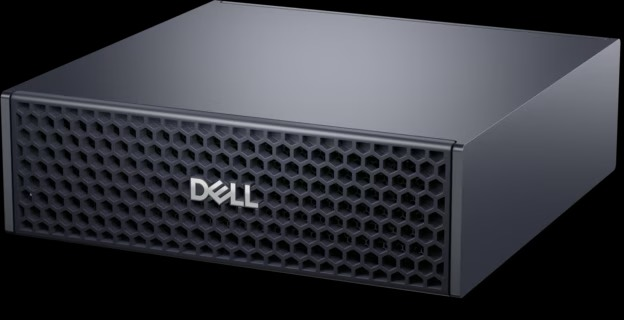
Dell Pro Max with GB10 is an AI accelerator in workstation clothing. It uses NVIDIA’s GB10 Grace Blackwell Superchip, 128 GB of onboard LPDDR5x memory and DGX OS 7, but surrounds that common platform with Dell’s chassis, warranty and sales channel. For organizations already buying Dell workstations, those operational details may be more important than small benchmark differences.
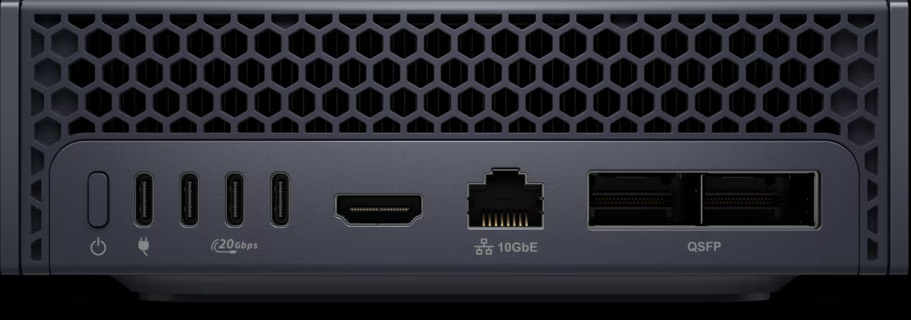
Dell lists a 20-core Arm CPU, integrated Blackwell GPU and memory operating at up to 8,533 MT/s. Storage choices include a 4 TB M.2 2242 PCIe Gen4 x4 NVMe TLC self-encrypting OPAL drive. Connectivity comprises three USB-C 20 Gb/s ports with DisplayPort alternate mode, a separate USB-C power input, HDMI 2.1b, 10GbE and two 200G-signalling QSFP connections through ConnectX-7. Dell specifies that one QSFP connection is required to link a second Pro Max with GB10.
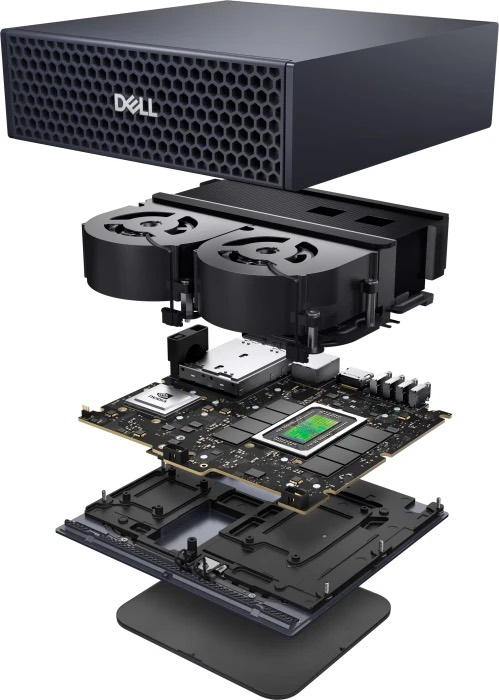
The workstation does not provide internal expansion slots, and its memory is onboard. That is the central trade-off of the category: a very large shared memory pool in a compact, power-conscious system, but little opportunity to replace the accelerator or expand RAM later. The 4 TB SSD option is therefore worth choosing at order time if local datasets and model variants will be retained.
Independent reviews show that Dell has not transformed GB10 performance, but it has produced a polished implementation. HotHardware measured the same 273 GB/s memory-bandwidth foundation and treated the system as a local model-development appliance rather than a general-purpose performance PC. ITPro recorded Geekbench 6 scores of 3,123 single-core and 19,708 multi-core on its unit, reported easy DGX OS setup, quiet behaviour and little external heat, and also criticized a UK price approaching £6,000. Those CPU scores should not be used to predict LLM throughput; model architecture, quantization, batch size and runtime matter far more.
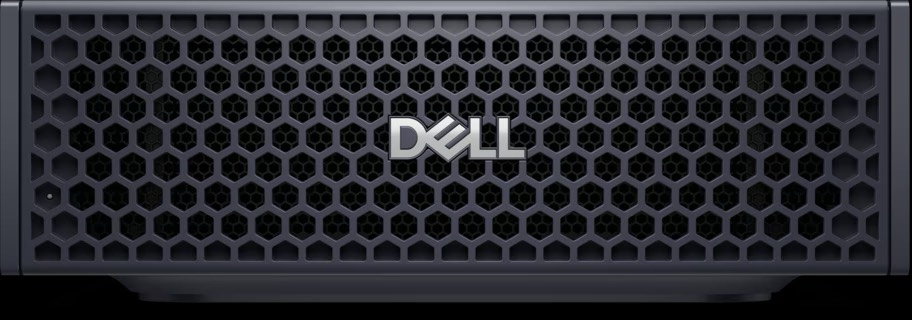
StorageReview’s comparison of multiple OEM systems reinforces the buying logic: the motherboard and compute are largely constant, while cooling, physical design, firmware, support and price vary. Cluster testing with Dell, Gigabyte and HP units showed that the 200 Gb fabric can be meaningful for distributed inference, but two-node scaling depends on parallelism strategy and is not an automatic doubling of speed.
Dell’s public regional pages demonstrate uneven availability. The checked India product page was “Call to Order” and offered callback sales rather than online checkout. Dell’s public rating displayed 4.9 from 55 ratings on that regional page, but the accessible page did not expose enough review text or verification context to summarize those ratings responsibly. The price and delivery date should therefore be marked quote-required, with tax, support tier and cable included in the request.
Buy the Dell when standardized procurement, onsite service and fleet consistency justify a premium. If the goal is simply to acquire GB10 compute at the lowest cost, compare an in-stock Acer Veriton GN100 or NVIDIA DGX Spark. For larger memory and much higher bandwidth in a different ecosystem, see the Mac Studio M5 Ultra and the full comparison.