How to Evaluate an AI Agent Before It Can Act
September 27, 2026
DGX Spark vs ZGX Nano vs Veriton GN100 vs Dell GB10 vs Mac Studio M5 Ultra
September 28, 2026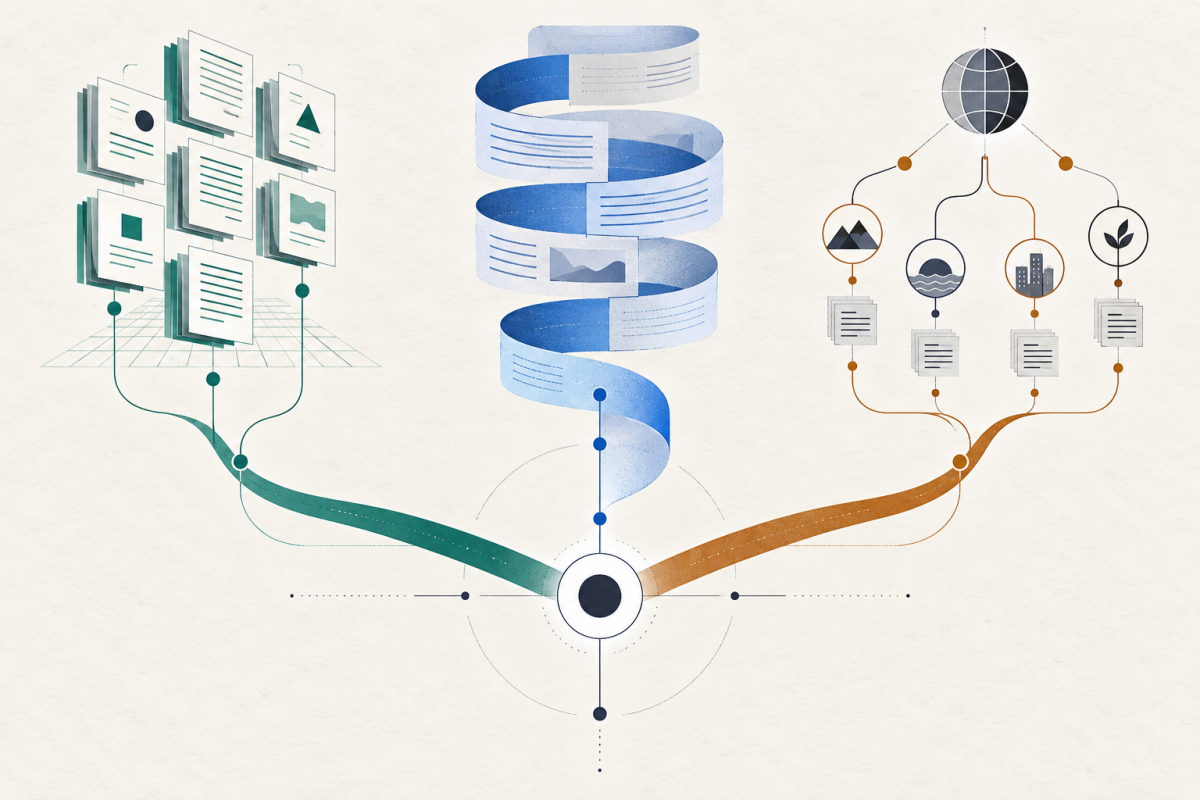
RAG, long context, and search are not interchangeable product labels. They are different ways to locate and present information to a person or model. The right choice depends on the corpus, question, freshness requirement, provenance standard, latency budget, and operating capacity.
Start with the smallest system that can answer the real question reliably.
What each approach does
Search returns documents or passages that match a query. It is often the best starting point when a human can inspect results, exact terms matter, or the corpus changes frequently.
Long context places a selected evidence pack directly into the model’s input. It can be simple and effective for a bounded set of documents, but cost, latency, attention, and context limits still matter.
Retrieval-augmented generation (RAG) retrieves selected material and asks a model to generate an answer from it. It can scale repeated question answering across a larger corpus, but it adds ingestion, chunking, indexing, retrieval, citation, evaluation, and refresh responsibilities.
1. Begin with the decision and user
If the user needs documents to inspect, search may be sufficient. If the user needs a synthesis from a small controlled evidence pack, long context may be simpler. If many users repeatedly ask varied questions across a larger governed corpus, RAG may become worthwhile.
Do not select an architecture merely because it is fashionable. State the job, output, evidence requirement, and acceptable failure.
2. Consider freshness
Search can query a current index, but only if the index is refreshed appropriately. Long context is as fresh as the evidence pack assembled for the request. RAG is as fresh as its ingestion and retrieval pipeline.
If freshness is critical, record source timestamps and expose them in the result. A fluent answer from stale evidence remains stale.
3. Make provenance a requirement
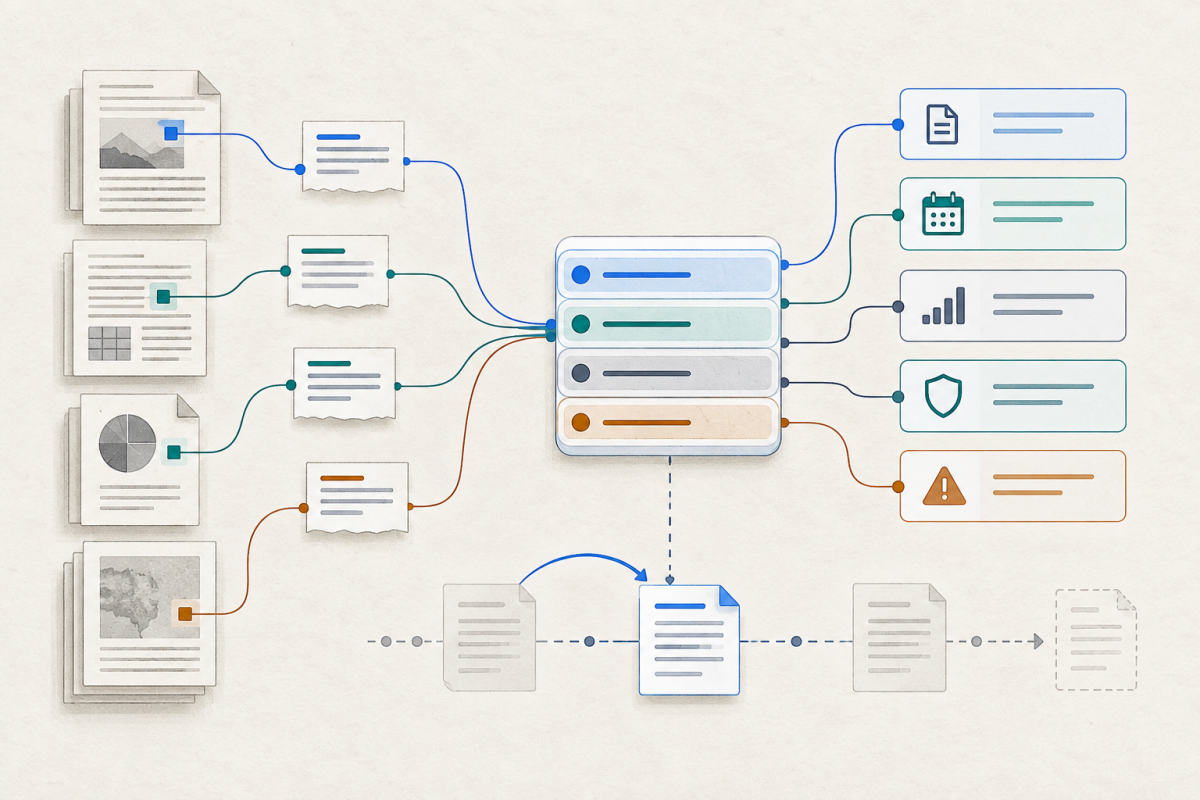
Search naturally exposes source results, though relevance still needs evaluation. Long-context systems can cite the supplied material if passages have stable identifiers. RAG requires deliberate citation mapping between generated claims and retrieved evidence.
If the workflow cannot show which source supports a material claim, generation should be treated as a lead, not a verified answer. Build an AI Knowledge System With Provenance describes the supporting record model.
4. Match the method to data structure
Exact identifiers, dates, amounts, statuses, and relationships may belong in structured queries rather than semantic retrieval. Search is strong for exact language and filters. Semantic retrieval can help with conceptual similarity but may miss a critical exact match or retrieve a plausible neighbor.
Many useful systems combine structured filters with search or semantic retrieval. The hybrid is justified only when each component has a clear role.
5. Account for scale and change
Long context is attractive when the evidence set is small enough to assemble and review. As the corpus grows, sending everything becomes inefficient and can make relevant material harder to distinguish.
RAG handles larger corpora by selecting a subset, but that selection becomes a new failure point. Search can scale well, but a human or later synthesis step must still interpret the results.
6. Evaluate total cost and latency
Count ingestion, indexing, storage, retrieval, model input, generation, review, monitoring, and maintenance. For long context, large inputs may dominate. For RAG, pipeline complexity and evaluation add cost even when each answer uses fewer tokens. For search, reviewer time may dominate.
This draft makes no current pricing or speed claim. Measure the actual candidate configuration on a dated corpus and query set.
7. Test the failure modes
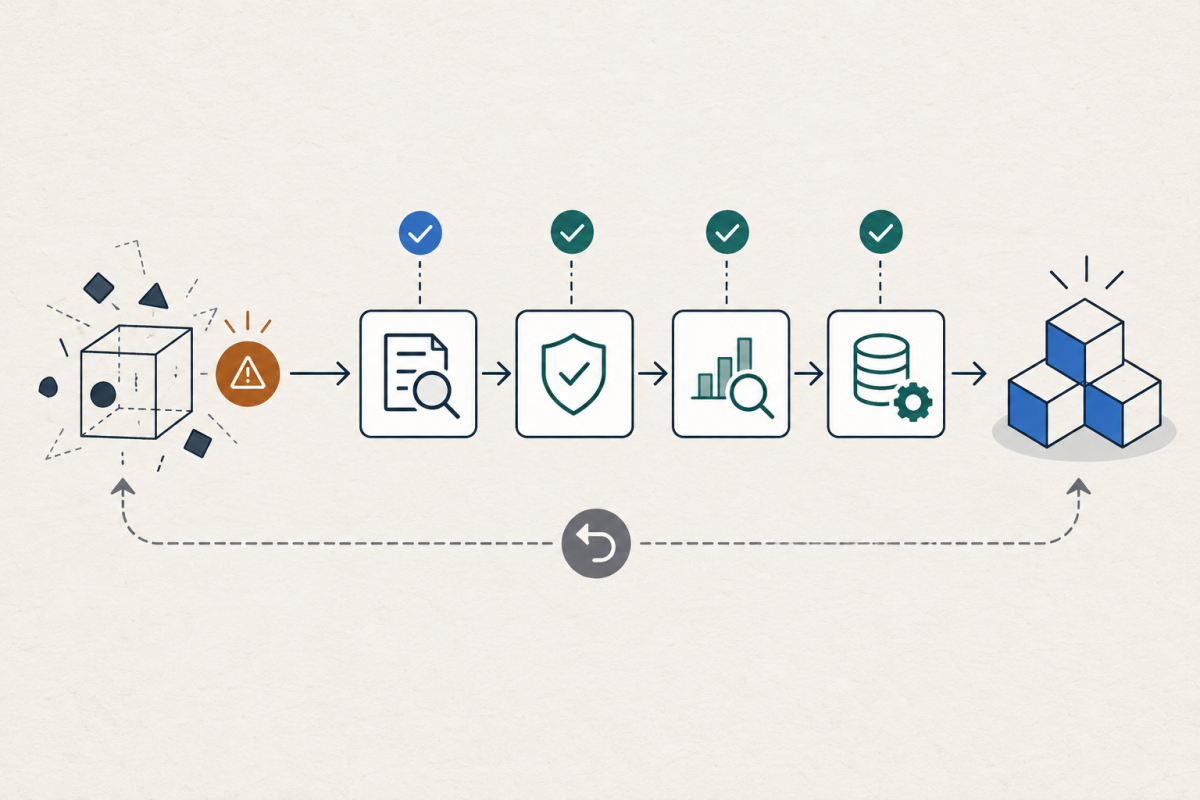
For search, test missed exact matches, poor ranking, filter errors, and stale indexing. For long context, test omitted evidence, conflicting passages, attention failures, and oversized inputs. For RAG, test ingestion gaps, bad chunk boundaries, retrieval misses, misleading neighbors, citation mismatches, and unsupported synthesis.
Include questions whose correct answer is “not found” and questions with conflicting evidence. A system that always produces a confident answer is not necessarily useful.
8. Use a reproducible evaluation set
Create a representative corpus and query set with expected evidence, not only expected wording. Record the model, tools, configuration, corpus version, and date. Evaluate retrieval separately from generation so a good final sentence does not hide a retrieval failure.
Useful measures may include evidence recall, source precision, unsupported-claim rate, answer usefulness, latency, cost per accepted result, and reviewer disagreement. Choose measures that match the job.
9. Prefer simple hybrids
A practical hybrid might use structured filters to narrow scope, search to retrieve exact passages, and a model to synthesize only the selected evidence. Another may use search as the default and long context for a bounded review packet.
Avoid stacking components without evidence that each one solves a real failure. Complexity creates more states to monitor and more ways for provenance to break.
Decision tree
- Does the user primarily need documents or passages to inspect? Start with search.
- Is the evidence pack small, bounded, and assembled for one task? Test long context.
- Is the corpus larger and queried repeatedly with a need for synthesis? Evaluate RAG.
- Are exact structured fields essential? Add structured retrieval or filters.
- Must every material claim be traceable? Make source identifiers and citation checks mandatory in any approach.
- Is the proposed system more complex than the measured problem requires? Return to the simpler option.
There is no permanent winner. Corpus size, model behavior, costs, and tools change. Preserve the evaluation set and revisit the choice when those conditions materially change.
Related reading: Reviews & Research, Technology Foundations, and AI Systems.